Bookkeeping vs. Accounting: Understanding the Key Differences for Your Business Success
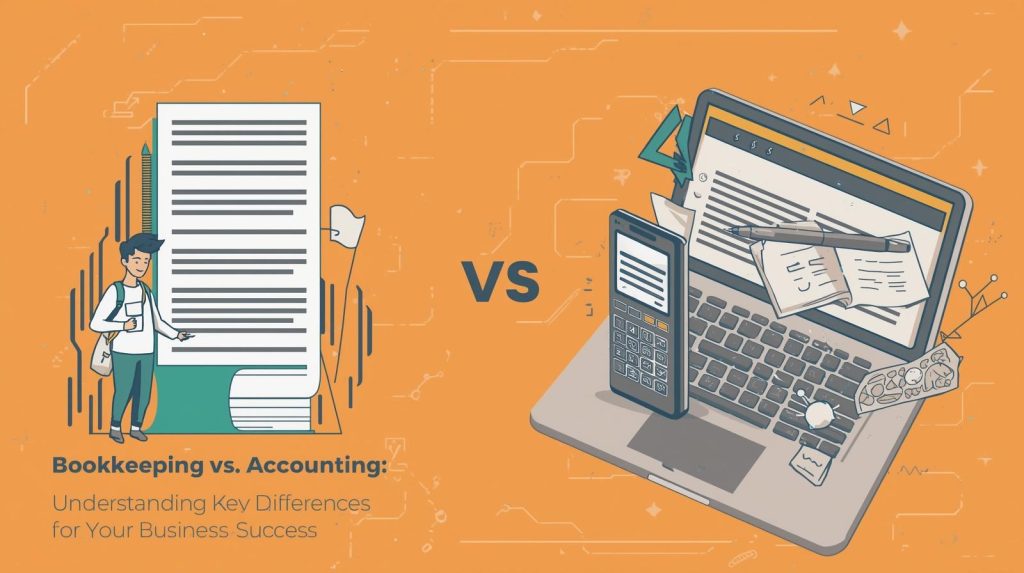
In the financial landscape of any business, two vital roles often overlap but serve distinct purposes — bookkeeping and accounting. While both are essential to maintaining financial health, understanding their differences can help you streamline operations and make smarter business decisions.
Bookkeeping lays the groundwork by recording daily financial transactions and keeping your books accurate and up to date. Accounting, on the other hand, takes a broader view — analyzing, interpreting, and reporting that data to guide strategy, growth, and compliance.
Whether you’re a startup founder or an established business owner, knowing how bookkeeping and accounting work together will help you manage your finances efficiently and set your business up for lasting success.
What Is Bookkeeping and Accounting?
The foundation of strong financial management lies in accurate recordkeeping and insightful analysis.
Bookkeeping is the process of systematically recording daily financial transactions — sales, purchases, payments, and receipts. Bookkeepers maintain ledgers, reconcile bank statements, and ensure all records are complete and organized.
Accounting, in contrast, builds on that foundation. Accountants analyze and interpret financial data to prepare reports and statements that reflect a business’s financial position. They provide insights into profitability, cash flow, and trends — helping business owners plan strategically, meet compliance obligations, and prepare for growth.
Key Differences Between Bookkeeping and Accounting
While bookkeeping and accounting are closely linked, they differ in focus and purpose:
| Aspect | Bookkeeping | Accounting |
| Function | Records daily financial transactions | Analyzes and interprets financial data |
| Objective | Ensure accuracy and organization | Guide decision-making and compliance |
| Tools | Accounting software (e.g., QuickBooks) | Financial reporting, tax prep tools |
| Skillset | Detail-oriented, procedural | Analytical, strategic, and regulatory |
| Output | Ledgers, receipts, reconciliations | Balance sheets, income statements, tax reports |
In short: bookkeeping captures what happens, accounting explains why it matters.
The Role of a Bookkeeper
A bookkeeper ensures that every transaction is accurately recorded and categorized. Key responsibilities include:
- Maintaining ledgers and reconciling bank accounts
- Managing invoices, payroll, and expenses
- Ensuring all records meet compliance and tax standards
- Preparing data for accountants to analyze
Accurate bookkeeping provides the financial clarity every business needs to operate smoothly and make confident decisions.
The Role of an Accountant
An accountant transforms raw financial data into actionable insights. Their responsibilities include:
- Preparing and analyzing financial statements
- Forecasting, budgeting, and financial planning
- Ensuring compliance with tax laws and regulations
- Providing strategic advice for growth and profitability
Accountants don’t just crunch numbers — they help you see the story behind them, guiding smarter business strategies and reducing risk.
When to Hire a Bookkeeper vs. an Accountant
- Startups and small businesses often begin with a bookkeeper to manage daily finances.
- As your business grows, an accountant becomes essential for deeper analysis, forecasting, and tax planning.
- Many businesses benefit from both — the bookkeeper maintaining the financial foundation and the accountant providing strategic direction.
Investing in professional financial support ensures you have the right expertise at every stage of your business journey.
Why Accurate Bookkeeping and Accounting Matter
Accurate records don’t just help with compliance — they empower decision-making. Proper bookkeeping and accounting:
- Keep your cash flow under control
- Help you prepare accurate financial reports and tax filings
- Reveal trends and opportunities for growth
- Protect your business from costly errors and penalties
When your books are clean and your financial insights are clear, your business becomes more resilient and scalable.
Common Misconceptions
- “Bookkeeping and accounting are the same.”
They’re connected but distinct — bookkeeping records data; accounting analyzes it. - “Only large businesses need these.”
Small businesses benefit the most from solid financial management. - “I can handle it myself.”
DIY bookkeeping can quickly lead to errors and missed insights. Professionals save time and provide peace of mind.
Top Tools for Bookkeeping and Accounting
Using the right software makes managing finances easier and more accurate:
- QuickBooks – ideal for small businesses handling invoices, expenses, and payroll.
- Xero – user-friendly, cloud-based accounting with strong reporting tools.
- Sage – robust solution for compliance, budgeting, and advanced analytics.
- FreshBooks and Wave – great for freelancers and startups seeking affordable simplicity.
Automating financial processes with these tools improves efficiency, reduces manual errors, and keeps your records audit-ready.
How Bookkeeping and Accounting Drive Business Decisions
Together, bookkeeping and accounting offer insights that shape business success:
- Bookkeeping provides the data foundation.
- Accounting transforms that data into strategies — from budget forecasts to investment planning.
By tracking profitability, analyzing trends, and forecasting outcomes, you can make confident financial decisions that fuel growth and stability.
Conclusion: Strengthen Your Financial Foundation
Both bookkeeping and accounting are essential pillars of sound financial management. Bookkeeping ensures accuracy in daily transactions, while accounting delivers the insight and strategy to guide long-term growth.
Whether you hire a bookkeeper, an accountant, or both, investing in professional financial expertise will save time, ensure compliance, and drive success.
Contact Us
At Spartan Accounting Group, we help businesses of all sizes build strong financial foundations — from accurate bookkeeping to strategic accounting advice.
📞 Call us: 0203 428 8830
📧 Email: info@spartanaccounting.co.uk
📅 Book a consultation: Schedule an appointment
Our team is ready to help you manage your books, understand your numbers, and grow your business with confidence.